

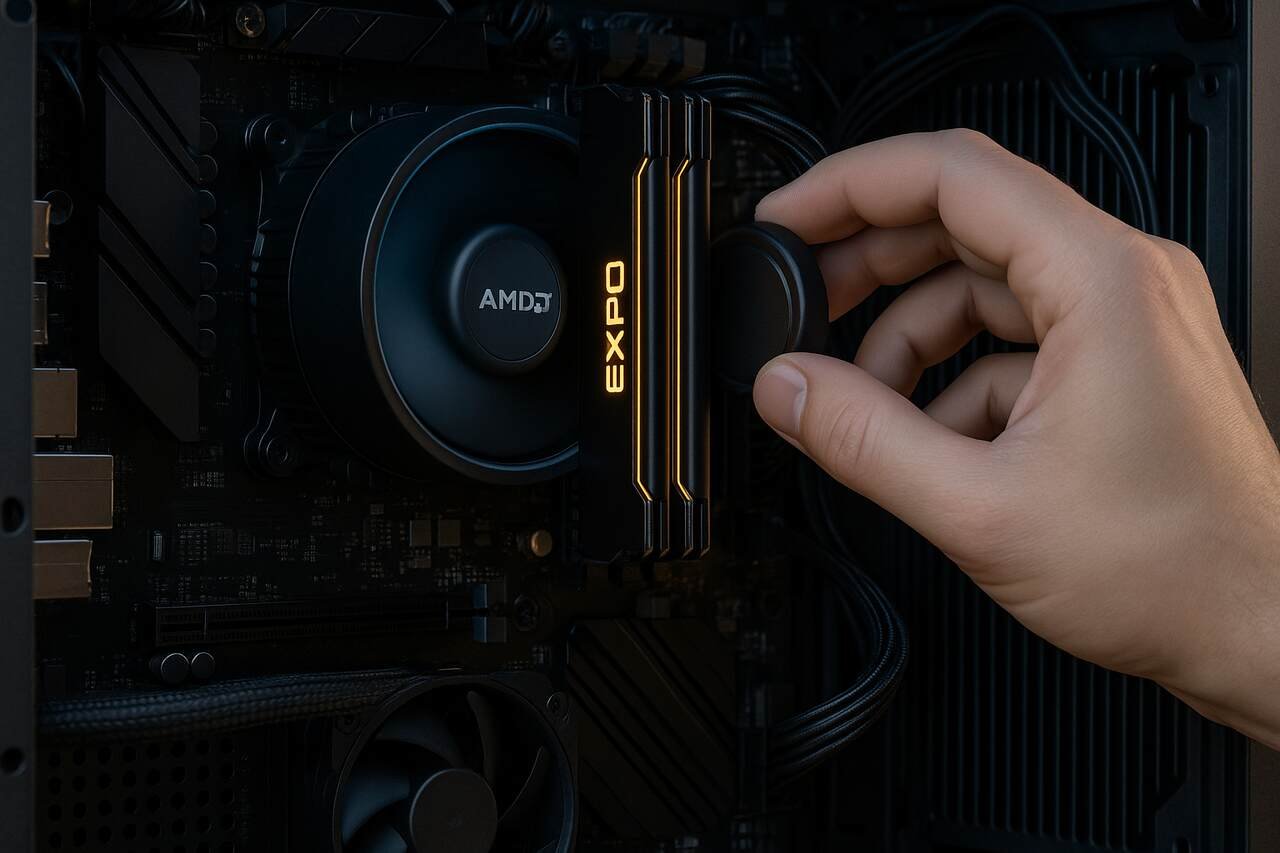
AMD EXPO has become one of the most influential technologies for users who want to improve memory performance, strengthen system responsiveness, and enable higher overclocking potential without complex manual tuning. It offers a streamlined way to configure memory profiles on compatible AMD platforms while supporting greater stability through validated performance parameters. This guide explores how to work with AMD EXPO in a practical, step-driven format that helps beginners, enthusiasts, and professionals configure systems for reliable performance gains.
By understanding how AMD EXPO operates, how to activate it, how to validate stability, and how to troubleshoot variations in memory behavior, users can build a strong foundation for high-performance computing. Each section moves step by step to help you approach the configuration process with confidence, explaining methods, components, and considerations that influence the final outcome.
Activate AMD EXPO in Your System BIOS
The first step in using AMD EXPO is enabling it within the BIOS on a compatible motherboard. Most modern AMD motherboards provide straightforward access to the EXPO toggle, allowing you to load preset memory performance profiles instantly. This step ensures that the system automatically applies optimized timings and frequencies supported by the installed memory kit.
To activate AMD EXPO, start by entering the BIOS during system boot by pressing the designated key on your motherboard. Locate your memory settings section, which typically lists frequency, timings, and performance options. Selecting the EXPO profile loads predefined performance parameters created specifically for the memory kit, including clock speed and timing adjustments. Once enabled, saving the configuration reboots your system with the upgraded settings applied.
Users should remain aware of the impacts of these settings on system behavior. While most compatible memory kits work immediately after activation, variations in motherboard design, power delivery, and processor memory controllers may affect stability. Monitoring initial performance and stability after enabling EXPO ensures that the upgrade results in reliable improvements.
Check BIOS Compatibility for EXPO
Some motherboards require firmware updates to support the newest EXPO profiles. Checking your manufacturer’s website can provide insight into whether a BIOS revision includes improved memory compatibility or performance fixes. Updating BIOS occasionally resolves issues such as boot loop behavior, missed memory detection, or reduced stability at higher frequencies.
Select the Correct EXPO Profile
Many memory kits ship with more than one EXPO profile to offer different performance targets. These profiles may emphasize either maximum frequency, tightened timings, or improved stability. Choosing the correct one depends on your goals. Higher frequency options may deliver faster bandwidth, while tighter timing variations enhance latency.
Confirm Hardware Support Before Enabling AMD EXPO
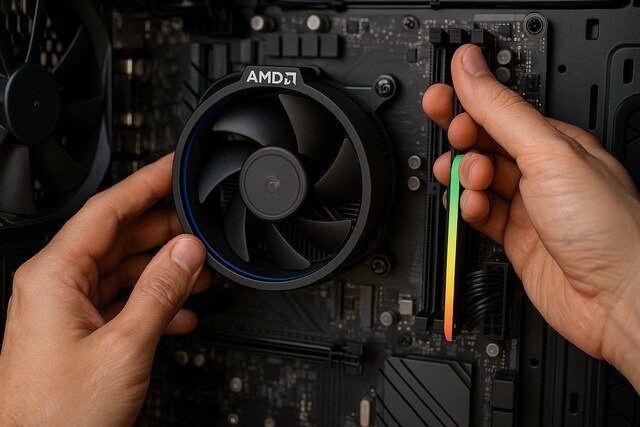
Before activating AMD EXPO, verifying hardware compatibility ensures that the configured performance settings operate safely and reliably. EXPO works best when the processor, motherboard, and memory kit support the same specifications required for stable operation. Proper alignment among these components eliminates unexpected errors or reduced performance.
Begin by confirming that your motherboard lists EXPO support within its technical documentation. Some early or budget-oriented boards may limit supported frequencies or timing ranges, which could influence performance outcomes. Next, ensure that your memory kit explicitly displays EXPO support on its packaging or specifications page. Memory designed specifically for EXPO includes thoroughly tested configurations that synchronize with AMD platforms.
It is also crucial to confirm that your processor’s memory controller can handle the selected frequency. While most modern AMD processors offer excellent memory compatibility, certain chips may have lower maximum frequencies depending on silicon quality or intended use case. Matching hardware capabilities provides a balanced configuration that supports long-term reliability.
Review Motherboard QVL Lists
Motherboard vendors provide qualified vendor lists that display which memory kits have been validated for use with specific models. These lists simplify the selection process by confirming that memory has passed internal compatibility tests. While memory not on the list may still work, choosing a listed kit enhances the likelihood of achieving full EXPO performance.
Evaluate Power Delivery and VRM Capability
Memory stability depends partly on the power delivery system of the motherboard. Stronger VRMs typically handle higher memory frequencies more reliably. Users running compact or entry-level motherboards may experience limited overclocking headroom, making conservative EXPO profiles more suitable.
Adjust Memory Frequency After Enabling AMD EXPO
Once EXPO is activated, users can further refine memory frequency to balance performance with stability. EXPO sets recommended parameters automatically, but some users may push beyond preset configurations for enhanced speed. Adjusting frequency involves raising memory clocks in small increments to find the highest stable point for your hardware.
Start by evaluating the initial frequency set by the EXPO profile. Some profiles target mid-range frequencies for universal stability, while others push closer to the upper limits of the memory kit. After identifying the baseline, manually increase the memory frequency in the BIOS to a slightly higher value. Testing stability with each adjustment ensures that the system can handle the change without errors or crashes.
These adjustments work best when supported by strong cooling and motherboard power regulation. Higher memory frequencies produce additional heat and may require slight voltage adjustments. Maintaining safe voltage levels protects long-term component health while improving the likelihood of stable performance during demanding workloads such as gaming, rendering, or data processing.
Explore Frequency Scaling Limits
Each memory kit has a maximum rated frequency, but some modules may exceed factory specifications if the silicon quality is strong. Incremental testing helps determine whether your kit can scale higher. Keep in mind that performance gains diminish as the frequency approaches the stability limit of the processor’s memory controller.
Balance Frequency and Latency
Increasing frequency may improve bandwidth, but latency often rises unless compensated by adjusting timings. Striking the right balance ensures that your memory delivers consistent real-world performance. Some workloads benefit more from low latency, while others rely on bandwidth.
Fine Tune Memory Timings for Additional Performance
Timing adjustments further enhance memory responsiveness after enabling EXPO. While EXPO presets deliver optimized configurations, users seeking greater control can refine individual timing parameters within the BIOS. Adjusting timings can offer noticeable improvements in latency-sensitive applications.
Begin by reviewing the timings set by the EXPO profile. These include primary parameters such as CAS latency, RAS to CAS delay, and row precharge time. Lowering these numbers decreases latency, allowing data to move more quickly through the memory subsystem. Test each adjustment gradually to maintain stability.
Tweaking timings requires careful consideration because reducing values too aggressively can introduce errors or prevent booting. Using diagnostic tools ensures that the configuration maintains proper error-free operation. With disciplined adjustments, timing optimization can create a highly responsive system suited for gaming, workstation tasks, and multitasking.
Adjust Primary Timings
Primary timings influence memory responsiveness the most. Reducing them slightly can yield significant performance improvements. However, the extent of timing reduction varies depending on the memory kit’s quality and the processor’s memory controller capabilities.
Tweak Secondary and Tertiary Timings
Secondary and tertiary timings impact memory efficiency in specific workloads. Adjusting them requires deeper knowledge but can improve performance in scenarios such as streaming, rendering, or scientific simulations. These settings should be handled with caution and tested thoroughly.
Validate System Stability After Configuring AMD EXPO
Verifying stability after enabling EXPO or adjusting memory settings is essential for maintaining reliable performance. Stability testing ensures that the system performs consistently without errors, crashes, or reduced responsiveness. This process protects your system from damage while confirming that changes deliver meaningful improvements.
To validate stability, run memory-focused diagnostic tools that stress test the memory subsystem. These tools evaluate how well your configuration handles workloads and identify weak points that may cause instability. Begin with short tests for quick validation, then move to longer sessions to confirm full reliability.
Testing stability after every adjustment creates a controlled process that prevents compounding errors. If a configuration fails stability tests, revert to previous settings or adjust voltage incrementally within safe limits. Ensuring a stable foundation allows the system to deliver long-term performance without interruptions.
Use Multiple Stress Testing Tools
Different testing programs evaluate various aspects of memory behavior. Using more than one ensures comprehensive stability validation. Some tools specialize in bandwidth stress, while others focus on timing sensitivity or prefetch accuracy.
Monitor System Temperatures
Higher memory speeds increase thermal output. Keeping your components cool improves stability and extends lifespan. Monitoring temperatures during stress testing ensures that the system remains within safe operating limits.
Compare AMD EXPO Profiles to Manual Overclocking
Understanding the difference between using EXPO profiles and manual memory tuning helps users choose the best approach. EXPO simplifies the configuration process by applying predefined performance parameters, while manual overclocking offers precise control over frequency, timings, and voltage. Each method has strengths depending on the user’s expertise and goals.
EXPO provides a reliable starting point by establishing stable performance values tested by memory manufacturers. It ensures compatibility with AMD systems and reduces the risk of configuration errors. Manual tuning expands on these settings by allowing users to push performance beyond factory presets through careful adjustments.
Choosing between these two methods depends on workload requirements and system behavior. Some users prefer EXPO for straightforward, predictable performance improvements, while enthusiasts may pursue manual tuning for optimized results in gaming, editing, or benchmarking.
Evaluate Time and Effort Required
EXPO activation requires a simple toggle, making it efficient for most users. Manual tuning involves extended testing, adjustments, and troubleshooting. Understanding the time commitment helps determine the appropriate approach.
Consider Performance Goals
If your goal is maximum performance, manual tuning may yield additional gains. For consistent, safe operation without extensive testing, EXPO provides an excellent balance of speed and stability.
Troubleshoot Common AMD EXPO Issues
Occasionally, users may face challenges when enabling EXPO. These issues can arise from compatibility problems, insufficient power delivery, outdated BIOS versions, or overly aggressive settings. Troubleshooting ensures that your system can fully utilize EXPO without interruptions or errors.
Common symptoms include instability, failure to boot, or the system reverting to lower memory speeds. When this happens, explore basic troubleshooting steps such as resetting BIOS, updating firmware, or trying alternative EXPO profiles. These actions often resolve performance inconsistencies quickly.
Addressing these issues requires a methodical approach. Keeping track of changes helps narrow down the cause of the problem, whether it stems from hardware limitations, firmware versions, or conflicting settings. With consistent troubleshooting, EXPO can operate reliably and deliver strong performance benefits.
Reset BIOS to Default Settings
If the system becomes unresponsive, resetting BIOS restores stable baseline values. This step eliminates problematic settings and allows you to reapply EXPO safely.
Update Firmware and Drivers
New firmware updates improve memory compatibility, reduce instability, and expand support for higher frequencies. Updating firmware ensures your hardware operates with the latest optimizations.
Performance Comparison for EXPO Configurations
| Configuration Type | Frequency Range | Difficulty Level | Stability Rating | Performance Gain |
| Default System Setting | 4800–5200 MHz | Easy | Very High | Moderate |
| Basic EXPO Profile | 5600–6000 MHz | Very Easy | High | High |
| Advanced EXPO Profile | 6000–6400 MHz | Easy | Medium | Higher |
| Manual Overclocking | 6400+ MHz | Moderate to Hard | Variable | Maximum |
Timing Adjustment and Impact
| Timing Category | Impact on Latency | Difficulty to Adjust | Best Use Case |
| Primary Timings | High | Medium | Gaming and real-time tasks |
| Secondary Timings | Medium | Hard | Rendering and media creation |
| Tertiary Timings | Low to Medium | Hard | Specialized workloads |
Conclusion
AMD EXPO provides a powerful yet accessible way to unlock the full potential of modern memory kits on AMD platforms. By offering predefined performance profiles, EXPO streamlines system optimization and allows users to upgrade responsiveness, stability, and bandwidth with minimal effort. When combined with careful tuning, stability checking, and troubleshooting, EXPO enables both casual users and enthusiasts to achieve fast, reliable performance tailored to their needs.
Explore more insightful and valuable content on our blog journalingtechniques! Stay updated with helpful tips, expert advice, and in-depth articles that enhance your knowledge.
FAQ’s
EXPO works with memory kits specifically designed for AMD platforms. Not all DDR5 kits include EXPO profiles, so checking specifications is important.
EXPO uses validated settings and stays within safe operating limits. It does not damage components when used as intended.
EXPO can significantly improve game load times, responsiveness, and frame consistency by optimizing memory speed and latency
Most EXPO profiles automatically set safe voltages. Manual adjustments are optional and mainly required for advanced tuning.
Yes, you can enable EXPO first and then refine settings manually. This approach is common among enthusiasts seeking extra performance.
This may occur due to BIOS version issues, memory compatibility, or overly aggressive profile settings. Updating BIOS or switching profiles can resolve the issue.
