






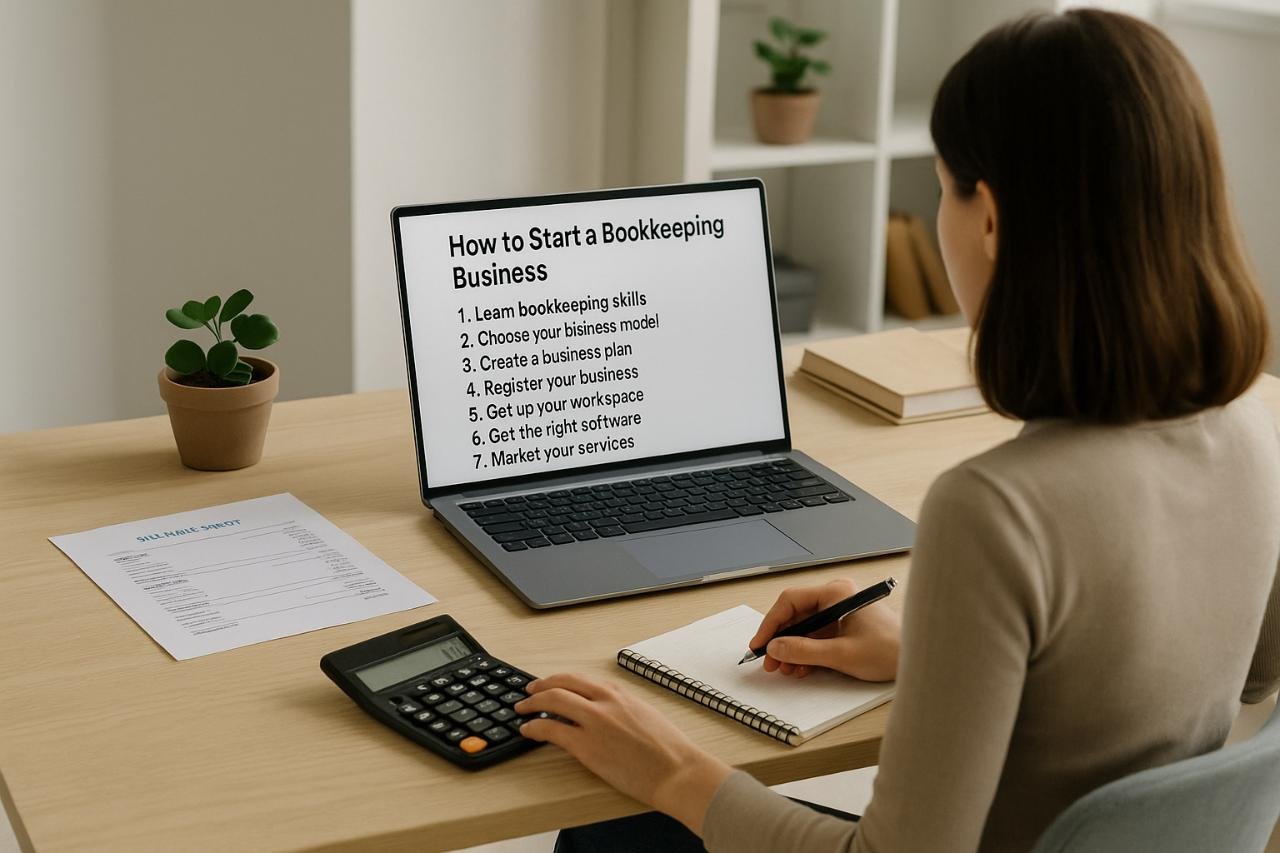
Starting a bookkeeping business is one of the most rewarding entrepreneurial paths in the financial services industry. As small businesses and startups continue to multiply, the demand for professional bookkeepers grows every year. Whether you have prior accounting experience or you’re transitioning from another career, this guide will walk you through how to start a bookkeeping business from scratch covering registration, pricing, software setup, marketing, and client acquisition strategies.
Establish Your Business Foundation
Building a solid foundation is the first step in launching a successful bookkeeping business. This involves defining your business model, choosing a legal structure, and registering your business name.
Start by deciding whether you’ll operate as a sole proprietor, limited liability company (LLC), or corporation. Each structure impacts how you pay taxes, your personal liability, and how potential clients perceive your credibility. An LLC is often ideal for bookkeepers because it offers liability protection without complex management requirements. Next, select a business name that reflects professionalism and clarity, then register it with your state and local authorities.
Also, secure your Employer Identification Number (EIN) from the IRS, even if you don’t have employees yet. It simplifies tax filing and establishes credibility when opening a business bank account.
Choosing the Right Legal Entity
When deciding between sole proprietorship, partnership, or LLC, consider how much risk you’re willing to assume personally. LLCs are preferred because they separate personal and business assets, providing legal protection.
Registering and Licensing Your Business
After selecting your structure, file the appropriate formation documents and acquire necessary permits. Some states require a professional license for bookkeeping, so check your state board’s requirements before operating.
Develop a Strong Business Plan


A structured business plan acts as your roadmap to success. It clarifies your goals, defines your target market, and outlines the services you will offer.
Your business plan should include an executive summary, service descriptions, market analysis, pricing strategy, and financial projections. Clearly identify your target audience for instance, small business owners, freelancers, or real estate agents since each group has unique bookkeeping needs. This clarity helps in tailoring your service offerings and marketing campaigns effectively.
A well-drafted business plan also attracts investors and lenders, should you seek funding. It serves as a blueprint to measure progress and make informed business decisions.
Defining Your Services and Pricing
Determine if you’ll offer general bookkeeping, payroll processing, or advanced financial reporting. You can charge hourly, monthly, or value-based rates depending on client complexity and volume.
Conducting Market Research
Study competitors in your area and identify gaps in their services. Use insights from local directories, social media, and business forums to differentiate your brand in the market.
Obtain Essential Tools and Bookkeeping Software
Bookkeeping depends on accuracy and efficiency, which means having the right tools is essential. Modern software automates repetitive tasks and ensures compliance with tax and accounting standards.
Start with trusted platforms like QuickBooks Online, Xero, FreshBooks, or Wave. These cloud-based solutions simplify data entry, reconciliation, and financial reporting. Also, invest in a secure computer, dual monitors for multitasking, and cloud storage like Google Drive or Dropbox for client file management.
Beyond software, ensure data security with antivirus protection and password management tools. Clients trust bookkeepers with sensitive financial data, so your digital infrastructure must meet industry security standards.
Selecting the Best Bookkeeping Software
Evaluate software based on client needs, your experience level, and scalability. QuickBooks is ideal for multi-client management, while Xero suits remote, tech-savvy firms.
Setting Up Secure Data Storage
Adopt cloud storage with encryption to store receipts, invoices, and statements. Regularly back up client files to prevent data loss and maintain compliance with data protection laws.
Deliver Exceptional Guest Experiences
Your success on Airbnb depends on delivering consistent, high-quality guest experiences. Positive reviews drive future bookings and improve listing rankings. From smooth check-ins to thoughtful amenities, every touchpoint matters.
Automate communication where possible, such as sending pre-arrival instructions and post-stay thank-you messages. Maintain professional and prompt replies to guest inquiries. Guests appreciate hosts who are attentive without being intrusive.
Encourage reviews by exceeding expectations. Offer small surprises like local snacks or guidebooks. Remember that even one negative review can affect occupancy rates. Continuous improvement and active listening make you a standout host.
Enhance Check-In and Communication
Use smart locks for self-check-ins and automated message templates to ensure consistent communication. Quick responses foster trust and convenience.
Improve Guest Satisfaction Through Personalization
Tailor experiences based on guest types. For families, provide baby gear; for business travelers, add workspace essentials. Personalized service leads to higher ratings and repeat bookings.
Scale and Automate Your Airbnb Business

Once your initial property performs well, scaling your Airbnb business becomes the next logical step. Expansion can take several forms, such as acquiring more properties, managing listings for others, or creating a brand identity.
Automation plays a key role in scaling. Tools for pricing, guest messaging, and cleaning coordination reduce workload and enhance efficiency. Consider hiring a virtual assistant or using property management software to handle multi-listing operations.
Growth also requires consistent branding. Use the same name, tone, and style across listings. Build a direct booking website to capture loyal customers and reduce dependence on Airbnb’s platform.
Use Automation and Management Software
Integrate platforms like Hospitable, Guesty, or Hostaway to centralize operations. Automation minimizes human error and ensures smooth processes across multiple listings.
Develop a Sustainable Growth Strategy
Expand strategically based on market performance data. Reinvest profits into new locations or upgrades. Sustainable scaling ensures long-term profitability without overextension.
| Bookkeeping Software | Key Features | Ideal For |
| QuickBooks Online | Invoicing, payroll, bank reconciliation | Small–mid businesses |
| Xero | Cloud collaboration, automation tools | Remote bookkeepers |
| Wave | Free invoicing & accounting | Freelancers |
| FreshBooks | Time tracking & client billing | Service providers |
Register for Taxes and Open a Business Bank Account
Separating personal and business finances is essential for clean bookkeeping and tax compliance. Opening a dedicated business bank account simplifies income tracking and expense reporting.
Apply for a business checking account and a credit card under your registered business name. This step not only streamlines bookkeeping but also enhances credibility when clients make payments. Many banks offer small business packages that integrate with accounting software for real-time synchronization.
Don’t forget to register for state and federal taxes. Depending on your location, you may also need to collect and remit sales tax. Consulting a tax professional during setup ensures full compliance and saves you from future legal complications.
Understanding Business Tax Obligations
Bookkeepers must register for self-employment taxes and possibly local business taxes. Learn which forms apply to your business type, such as Schedule C for sole proprietors or Form 1065 for partnerships.
Managing Financial Transactions Professionally
Always separate personal and business transactions. Doing so makes reconciliation faster and protects your records during audits or financial reviews.
Build Your Brand Identity and Online Presence
A strong brand helps your bookkeeping business stand out and attract clients in a competitive market. Your brand identity communicates your professionalism, reliability, and expertise.
Start by designing a professional logo, selecting consistent colors, and creating business cards. Then, build an optimized website showcasing your services, pricing, testimonials, and a booking form. Use your website as a content hub where you post articles about financial management, bookkeeping tips, and tax updates.
Establish your presence on LinkedIn, Facebook, and Instagram to reach potential clients. Share client success stories (with permission), engage with industry groups, and participate in discussions about financial best practices.
Creating a Professional Website
Your website should load fast, include clear calls to action, and integrate contact forms. Optimize it with local SEO to appear in searches like “bookkeeper near me” or “virtual bookkeeping services.”
Developing a Visual and Verbal Brand Voice
Use consistent messaging and tone across all platforms. A trustworthy and educational voice builds authority and client confidence in your bookkeeping services.
Market Your Bookkeeping Services Effectively
Even the best bookkeeping service needs effective marketing to grow. Focus on both online and offline strategies that build trust and visibility in your niche.
Digital marketing is your strongest ally leverage search engine optimization (SEO), Google Business Profile listings, and targeted social media ads. Offer free consultations or downloadable resources like “The Ultimate Small Business Expense Tracker” to capture leads. Networking with accountants, business consultants, and tax preparers also leads to valuable client referrals.
Offline, attend local business meetups, chamber of commerce events, and entrepreneur workshops. Personal relationships and word-of-mouth referrals still play a major role in the bookkeeping industry.
Implementing Digital Marketing Strategies
Use keyword-rich blog posts, client case studies, and email campaigns to build online visibility. Paid advertising on platforms like Google Ads can generate immediate leads.
Leveraging Referrals and Partnerships
Form partnerships with accountants or financial planners. Offer a referral program that rewards existing clients for successful introductions.
| Marketing Channel | Purpose | Example Action |
| SEO | Organic traffic | Blog posts & keyword optimization |
| Referrals | Client trust | Partner with CPAs |
| Social Media | Engagement | Post finance tips |
| Networking | Local exposure | Attend business expos |
Manage Growth and Maintain Client Relationships
As your bookkeeping business expands, managing clients effectively becomes crucial for long-term success. Strong client relationships lead to retention, referrals, and sustainable growth.
Implement a customer relationship management (CRM) tool like HubSpot, Zoho, or Practice Ignition to track client interactions, invoices, and renewals. Regularly communicate with clients to review reports, discuss improvements, and ensure satisfaction. Establish standard operating procedures (SOPs) for consistency in service delivery.
To manage workload, consider hiring virtual assistants or subcontracting other bookkeepers. Scaling responsibly allows you to maintain service quality while handling more clients efficiently.
Implementing Client Retention Strategies
Send personalized follow-ups, holiday greetings, or periodic newsletters. Consistent communication strengthens trust and improves client satisfaction.
Expanding Services and Scaling Operations
Add complementary services like payroll management, budgeting, or financial consulting. Automation and delegation enable sustainable business growth.
Conclusion
Starting a bookkeeping business requires careful planning, legal setup, strategic marketing, and commitment to professionalism. By establishing a strong foundation, using the right software, building an online presence, and nurturing client relationships, you can turn your bookkeeping expertise into a thriving and profitable business. Whether you aim to work remotely or serve local clients, the key is consistency, trust, and continuous learning.
Explore more insightful and valuable content on our blog journalingtechniques! Stay updated with helpful tips, expert advice, and in-depth articles that enhance your knowledge.
FAQ’s
No formal certification is required, but credentials like Certified Bookkeeper (CB) or QuickBooks ProAdvisor increase credibility and attract higher-paying clients.
Startup costs typically range from $2,000 to $5,000, including registration, software, marketing, and initial equipment.
Yes, bookkeeping is ideal for home-based businesses. You only need a secure computer setup, accounting software, and internet access.
Bookkeepers find clients through referrals, LinkedIn networking, SEO-optimized websites, and partnerships with accountants and business consultants.
Profitable niches include eCommerce bookkeeping, real estate, construction, and freelancer management all of which have unique reporting needs.
Scale by hiring virtual assistants, adopting automation tools, and offering additional services like payroll or tax preparation.