


Regional One Health has become a critical framework for governments, healthcare organizations, agricultural sectors, and environmental agencies that need coordinated responses to complex public health challenges. Infectious diseases, antimicrobial resistance, food safety risks, climate-related health emergencies, and zoonotic outbreaks now move across borders and ecosystems faster than traditional healthcare systems can respond independently. A regional approach connects medical professionals, veterinarians, environmental scientists, policymakers, laboratories, and community organizations into a unified structure that improves prevention, surveillance, and emergency response.
The growing interaction between humans, animals, and ecosystems has increased the demand for collaborative health management systems. Regional One Health programs strengthen disease monitoring, improve healthcare coordination, support sustainable agriculture, and reduce environmental threats that influence public health outcomes. Countries and regional authorities increasingly rely on integrated health governance because isolated systems create delays in outbreak detection, fragmented communication, and inconsistent policy enforcement.
Establish Integrated Regional Health Governance
Regional One Health programs begin with a coordinated governance structure that connects healthcare authorities, veterinary agencies, agricultural departments, environmental organizations, and emergency management systems. Effective governance creates shared accountability, standardized communication protocols, and unified operational procedures that allow multiple sectors to work together during disease outbreaks and environmental crises.
Regional authorities usually establish cross-sector committees, technical advisory boards, and operational task forces that oversee planning, surveillance, and emergency response activities. Public health institutions collaborate with ministries of agriculture, wildlife protection agencies, food safety regulators, and academic research centers to align strategic goals. These partnerships improve decision-making because organizations exchange real-time information instead of operating through isolated reporting systems.
Governance frameworks also define funding responsibilities, data-sharing agreements, and legal authorities across jurisdictions. Regional coordination becomes especially important when neighboring provinces, states, or countries share livestock trade routes, wildlife migration corridors, water systems, or transportation networks. Without unified governance, inconsistent policies can create vulnerabilities that allow diseases and environmental threats to spread rapidly.
| Governance Component | Primary Function | Participating Organizations | Regional Impact |
| Public Health Coordination | Disease prevention and response | Health ministries, hospitals, laboratories | Faster outbreak containment |
| Veterinary Oversight | Animal disease monitoring | Veterinary agencies, livestock authorities | Reduced zoonotic transmission |
| Environmental Monitoring | Ecosystem health assessment | Environmental agencies, conservation groups | Improved pollution and climate response |
| Food Safety Regulation | Supply chain protection | Agriculture departments, food inspectors | Safer food distribution |
| Emergency Management | Crisis coordination | Disaster response authorities | Faster regional mobilization |
Build Coordinated Disease Surveillance Networks
Regional disease surveillance systems provide continuous monitoring for infectious diseases affecting humans, animals, and ecosystems. Integrated surveillance allows health officials to detect emerging threats early, reducing the likelihood of large-scale outbreaks and economic disruption. Surveillance networks become significantly more effective when hospitals, veterinary clinics, wildlife organizations, and environmental laboratories share information through centralized platforms.
Public health agencies collect epidemiological data from hospitals, diagnostic laboratories, wastewater systems, livestock farms, and wildlife monitoring stations. Veterinary professionals report unusual animal illnesses, while environmental researchers track contamination events, vector populations, and climate-related ecological changes. Data integration enables authorities to identify patterns that may signal cross-species transmission or regional environmental risks.
Advanced surveillance systems increasingly use artificial intelligence, geographic information systems, genomic sequencing, and digital reporting platforms. These technologies improve regional visibility by identifying outbreak clusters, transmission routes, and emerging pathogen mutations. Coordinated surveillance also supports international reporting requirements and strengthens compliance with global health standards established by organizations such as the World Health Organization and the World Organisation for Animal Health.
Regional surveillance often focuses on several interconnected areas:
- Zoonotic disease monitoring
- Antimicrobial resistance tracking
- Foodborne illness detection
- Water quality surveillance
- Vector-borne disease analysis
- Wildlife pathogen monitoring
- Climate-sensitive disease forecasting
Strengthen Human Healthcare Collaboration

Human healthcare systems play a central role in Regional One Health initiatives because hospitals, clinics, laboratories, and emergency medical services provide frontline detection and treatment capabilities. Regional coordination ensures healthcare providers can rapidly share information about infectious diseases, environmental exposures, and unusual clinical patterns.
Healthcare organizations establish standardized reporting procedures that connect physicians, epidemiologists, and laboratory specialists with veterinary and environmental agencies. Shared protocols improve communication during outbreaks involving zoonotic pathogens such as avian influenza, rabies, coronaviruses, and vector-borne diseases. Integrated reporting also reduces delays in diagnosis and strengthens regional preparedness.
Regional healthcare collaboration extends beyond emergency response. Chronic disease prevention, mental health support, environmental exposure monitoring, and occupational health programs increasingly rely on interdisciplinary coordination. Communities affected by industrial pollution, agricultural runoff, or climate-related disasters often require combined medical and environmental interventions. Collaborative healthcare models improve resource allocation and help regional authorities address social determinants of health more effectively.
Healthcare networks also benefit from telemedicine systems, shared electronic health records, and interoperable digital infrastructure. These technologies allow regional providers to coordinate care across rural and urban areas, improving healthcare access during emergencies and reducing disparities in underserved populations.
Expand Veterinary and Animal Health Programs
Veterinary medicine is a foundational component of Regional One Health because many infectious diseases originate in animals before affecting human populations. Regional veterinary systems monitor livestock health, wildlife diseases, companion animal infections, and agricultural biosecurity risks that influence public health outcomes.
Veterinary agencies collaborate with livestock producers, poultry operations, aquaculture facilities, wildlife conservation groups, and animal transport authorities to identify disease threats early. Routine testing, vaccination campaigns, quarantine procedures, and biosecurity inspections help prevent disease transmission across animal populations and regional borders.
Animal health programs also support food security and economic stability. Livestock disease outbreaks can disrupt agricultural production, reduce trade opportunities, and increase food prices. Regional coordination helps governments maintain safe food systems while protecting farmers and agricultural industries from severe financial losses.
Wildlife surveillance has become increasingly important due to habitat loss, urban expansion, and climate-driven migration changes. Veterinarians and environmental scientists monitor wildlife populations for pathogens that may spread to domestic animals or humans. Regional wildlife programs often focus on bats, migratory birds, rodents, primates, and insect vectors because these species frequently contribute to emerging infectious disease risks.
| Animal Health Sector | Key Activities | Public Health Benefit |
| Livestock Monitoring | Disease testing and vaccination | Reduced zoonotic outbreaks |
| Wildlife Surveillance | Pathogen tracking | Early outbreak detection |
| Companion Animal Care | Vaccination and reporting | Lower household transmission risk |
| Aquaculture Oversight | Water and disease management | Safer seafood production |
| Border Biosecurity | Animal import inspection | Controlled regional spread |
Develop Environmental Health Protection Systems
Environmental health protection strengthens Regional One Health initiatives by addressing pollution, climate change, biodiversity loss, and ecosystem degradation that directly influence human and animal health. Environmental monitoring helps regional authorities identify risks before they escalate into public health emergencies.
Environmental agencies collect data related to air quality, water contamination, soil degradation, chemical exposure, and waste management. Scientists monitor industrial emissions, agricultural runoff, deforestation, and urban development patterns that may increase disease transmission or environmental toxicity. Coordinated environmental assessments help healthcare and veterinary sectors understand how ecological changes affect disease patterns.
Climate change has intensified the need for integrated environmental health planning. Rising temperatures, flooding, droughts, and shifting weather conditions influence mosquito populations, waterborne disease spread, food production systems, and respiratory health risks. Regional authorities increasingly incorporate climate adaptation strategies into One Health planning to improve resilience against future environmental disruptions.
Sustainable ecosystem management also supports biodiversity conservation and food system stability. Healthy ecosystems reduce pathogen spillover risks, improve water quality, and maintain natural barriers against disease transmission. Regional environmental protection programs often include wetland restoration, wildlife habitat preservation, sustainable agriculture initiatives, and pollution control regulations.
Improve Laboratory and Diagnostic Capacity
Regional laboratory networks provide essential diagnostic support for disease surveillance, outbreak investigation, food safety testing, and environmental analysis. Integrated laboratory systems improve response speed by enabling healthcare, veterinary, and environmental agencies to exchange diagnostic information rapidly.
Laboratories within Regional One Health frameworks often share genomic sequencing capabilities, biosafety standards, specimen transport systems, and data reporting platforms. Public health laboratories coordinate with veterinary diagnostic centers and environmental testing facilities to analyze pathogens across multiple species and environmental samples.
Advanced diagnostic technologies improve outbreak detection accuracy and strengthen regional preparedness. Polymerase chain reaction testing, genomic surveillance, digital pathology, and molecular epidemiology help scientists identify emerging pathogens and monitor transmission dynamics. Regional sequencing capacity became especially important during the COVID-19 pandemic because governments needed rapid insight into viral mutations and transmission patterns.
Laboratory coordination also improves workforce efficiency. Shared training programs, accreditation standards, and quality assurance protocols strengthen technical expertise across sectors. Regional partnerships between universities, research institutes, and government laboratories further support innovation in diagnostics, vaccine development, and epidemiological research.
Implement Regional Data Sharing Infrastructure
Data sharing infrastructure allows Regional One Health systems to coordinate information across healthcare institutions, veterinary networks, laboratories, environmental agencies, and emergency management organizations. Effective data integration improves situational awareness and enables faster decision-making during public health events.
Regional authorities often develop centralized digital platforms that aggregate epidemiological data, laboratory reports, environmental indicators, and animal health records. Interoperable systems reduce duplication and improve communication between organizations operating in different jurisdictions. Cloud-based technologies, artificial intelligence tools, and predictive analytics further strengthen surveillance capabilities.
Cybersecurity and data governance remain critical components of regional infrastructure planning. Health organizations must protect sensitive patient information, research data, and government records while maintaining secure cross-border communication channels. Legal agreements and privacy standards help establish trust between participating agencies.
Digital transformation also improves accessibility in remote and underserved communities. Mobile reporting applications, telehealth systems, and field surveillance technologies allow frontline workers to submit real-time information from rural areas. This expanded visibility strengthens regional preparedness and supports faster intervention during disease outbreaks or environmental emergencies.
Coordinate Emergency Preparedness and Response
Regional emergency preparedness programs enable governments and institutions to respond rapidly to disease outbreaks, natural disasters, food contamination events, and environmental crises. Coordinated planning reduces confusion during emergencies and improves resource mobilization across healthcare, veterinary, and environmental sectors.
Emergency response frameworks usually include incident command systems, regional communication protocols, stockpile management plans, and cross-border coordination agreements. Hospitals, laboratories, emergency responders, veterinary agencies, and public health authorities conduct joint exercises to test operational readiness and identify system weaknesses.
Preparedness planning must account for multiple hazards simultaneously. Flooding, heatwaves, droughts, and wildfires can disrupt healthcare infrastructure while increasing disease transmission risks. Regional One Health strategies therefore integrate climate resilience, supply chain continuity, and community outreach into emergency planning.
Public communication is another critical component of emergency response. Regional authorities need clear messaging systems that provide accurate information about disease prevention, food safety, evacuation procedures, and environmental risks. Trusted communication improves public compliance and reduces misinformation during crises.
Advance Antimicrobial Resistance Management
Antimicrobial resistance represents one of the most urgent global health threats addressed through Regional One Health strategies. Resistant bacteria, viruses, fungi, and parasites affect healthcare systems, agricultural industries, and environmental ecosystems simultaneously. Regional coordination improves monitoring, prevention, and stewardship efforts across sectors.
Healthcare providers implement antimicrobial stewardship programs that encourage responsible antibiotic use, infection prevention, and evidence-based prescribing practices. Veterinary professionals work with livestock producers to reduce unnecessary antimicrobial use in animal agriculture while maintaining animal welfare standards.
Environmental agencies contribute by monitoring pharmaceutical contamination in water systems, wastewater facilities, and agricultural runoff. Resistant microorganisms can spread through ecosystems, making environmental surveillance an important part of regional management strategies.
Regional antimicrobial resistance programs often include:
- Coordinated laboratory testing
- Antibiotic usage monitoring
- Public awareness campaigns
- Infection prevention training
- Agricultural stewardship standards
- Cross-border reporting systems
- Research partnerships for new therapies
Integrated resistance management protects healthcare effectiveness, supports food production systems, and reduces long-term treatment costs associated with multidrug-resistant infections.
Support Food Safety and Agricultural Security
Food systems represent a major connection point between human health, animal health, and environmental sustainability. Regional One Health programs strengthen food safety by improving agricultural oversight, supply chain monitoring, and contamination prevention.
Agricultural authorities collaborate with farmers, veterinarians, food processors, transportation providers, and retailers to establish safety standards throughout production and distribution networks. Inspection programs monitor livestock health, pesticide use, water quality, processing facilities, and cold chain management.
Foodborne illnesses can spread rapidly across regions through interconnected trade systems. Coordinated surveillance helps authorities identify contamination sources quickly and implement recalls before outbreaks escalate. Laboratory testing and traceability systems further improve response effectiveness.
Sustainable agriculture also supports broader One Health goals. Soil conservation, responsible water management, integrated pest control, and biodiversity protection improve environmental resilience while maintaining food production capacity. Regional planning helps balance agricultural productivity with ecosystem preservation and public health protection.
Expand Workforce Training and Education
Regional One Health initiatives require a highly trained workforce capable of operating across disciplinary boundaries. Healthcare professionals, veterinarians, environmental scientists, laboratory specialists, epidemiologists, and emergency responders need collaborative training that strengthens communication and operational coordination.
Universities and public health institutions increasingly develop interdisciplinary educational programs focused on epidemiology, zoonotic disease management, environmental science, public policy, and data analytics. Joint simulation exercises help professionals understand how different sectors contribute during emergencies.
Continuous professional development ensures regional workforces remain prepared for evolving health threats. Training programs often include outbreak investigation methods, biosafety procedures, digital surveillance tools, risk communication strategies, and climate adaptation planning.
Community education is equally important. Farmers, food workers, wildlife professionals, and local leaders need practical guidance related to disease prevention, hygiene practices, vaccination campaigns, and environmental stewardship. Public participation improves regional resilience because communities become active partners in surveillance and prevention efforts.
| Workforce Area | Required Skills | Regional Benefit |
| Epidemiology | Disease tracking and analysis | Faster outbreak detection |
| Veterinary Medicine | Animal surveillance and biosecurity | Reduced zoonotic transmission |
| Environmental Science | Ecosystem monitoring | Better climate resilience |
| Laboratory Science | Diagnostic testing | Accurate disease identification |
| Emergency Management | Crisis coordination | Improved response efficiency |
Strengthen Community Engagement Programs
Community engagement improves the effectiveness of Regional One Health initiatives because local populations often detect health and environmental changes before official systems identify major threats. Public participation strengthens surveillance, increases trust, and improves compliance with health interventions.
Regional authorities collaborate with schools, religious organizations, community leaders, agricultural cooperatives, and nonprofit groups to distribute health information and encourage preventive practices. Educational campaigns address vaccination, sanitation, food safety, vector control, and environmental conservation.
Community-based surveillance systems allow residents to report unusual animal deaths, disease symptoms, water contamination, or environmental hazards directly to authorities. Mobile technology and local reporting networks improve communication between rural populations and regional health systems.
Trust remains essential during emergencies. Communities are more likely to follow public health guidance when authorities communicate transparently and involve local stakeholders in planning processes. Regional engagement strategies therefore emphasize culturally appropriate messaging and long-term relationship building.
Integrate Climate Adaptation into Health Planning
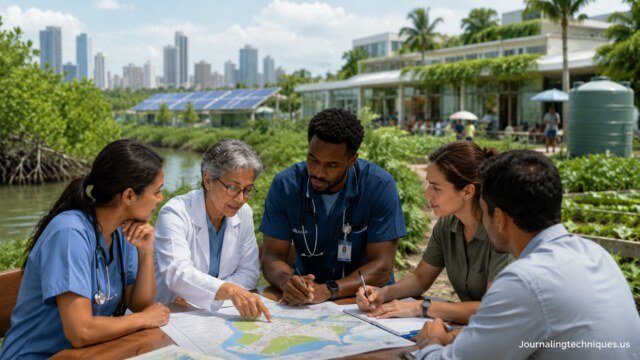
Climate adaptation has become a central component of Regional One Health planning because environmental changes increasingly influence disease transmission, food security, water availability, and healthcare infrastructure stability. Regional authorities must anticipate climate-related health risks while strengthening resilience across sectors.
Heatwaves, flooding, droughts, and severe storms affect healthcare operations, agricultural systems, wildlife habitats, and sanitation infrastructure simultaneously. Integrated planning allows governments to coordinate disaster preparedness, emergency shelter management, vector control, and food distribution systems.
Climate-sensitive diseases such as malaria, dengue fever, cholera, and Lyme disease continue expanding into new geographic areas due to changing environmental conditions. Regional surveillance systems help authorities monitor vector populations, environmental changes, and disease trends that may emerge over time.
Long-term adaptation strategies often include sustainable water management, resilient healthcare infrastructure, renewable energy systems, urban green space development, and ecosystem restoration. These investments improve environmental stability while supporting public health protection and economic sustainability.
Encourage Regional and International Partnerships
Regional One Health initiatives achieve stronger outcomes when governments, academic institutions, international organizations, and private sector partners collaborate across borders. Infectious diseases, environmental pollution, and climate-related disruptions rarely remain confined to one jurisdiction.
International organizations such as the World Health Organization, the Food and Agriculture Organization, and the World Organisation for Animal Health support technical guidance, surveillance standards, and emergency response coordination. Regional alliances also improve access to funding, research expertise, and laboratory resources.
Cross-border partnerships strengthen transportation monitoring, wildlife surveillance, agricultural regulation, and emergency communication systems. Neighboring countries often share river systems, trade corridors, migratory wildlife routes, and environmental ecosystems that require coordinated oversight.
Academic institutions contribute research capacity, workforce training, and technological innovation. Universities frequently partner with public health agencies to study emerging pathogens, environmental risks, and healthcare delivery models. Private sector organizations further support supply chain logistics, biotechnology development, digital infrastructure, and pharmaceutical manufacturing.
Measure Outcomes and Improve Regional Performance
Continuous evaluation allows Regional One Health programs to identify operational gaps, improve coordination, and strengthen long-term sustainability. Performance measurement helps governments and organizations assess whether integrated systems effectively reduce disease risks and improve public health outcomes.
Regional monitoring frameworks often include indicators related to outbreak response times, vaccination coverage, laboratory capacity, antimicrobial resistance trends, food safety incidents, environmental quality, and workforce readiness. Data analysis helps authorities prioritize investments and refine operational strategies.
Independent audits, simulation exercises, and after-action reviews provide additional insight into system performance. Regional authorities evaluate communication effectiveness, resource distribution, and interagency coordination following emergency responses or public health events.
Long-term success depends on sustained political commitment, funding stability, workforce development, and technological modernization. Regional One Health systems must remain adaptable because emerging diseases, environmental pressures, and demographic changes continue reshaping global health risks.
Conclusion
Regional One Health provides a comprehensive framework for protecting human populations, animal systems, and environmental ecosystems through integrated coordination and shared responsibility. Modern health threats increasingly cross disciplinary and geographic boundaries, making isolated approaches less effective in preventing outbreaks, environmental degradation, and food system disruptions.
Strong governance, coordinated surveillance, advanced laboratory systems, workforce training, environmental monitoring, and community engagement all contribute to resilient regional health systems. Healthcare providers, veterinarians, environmental scientists, agricultural authorities, and policymakers achieve stronger outcomes when they collaborate through unified structures.
As climate change, urbanization, global trade, and emerging infectious diseases continue influencing public health, Regional One Health strategies will become even more important for long-term resilience. Regions that invest in integrated systems today improve their ability to prevent crises, protect economic stability, and support healthier communities in the future.
FAQ’s
Regional One Health improves disease prevention by connecting healthcare providers, veterinary agencies, environmental organizations, and laboratories through shared surveillance and response systems. Early detection and coordinated communication reduce outbreak risks and improve intervention speed.
Regional One Health programs typically involve public health agencies, hospitals, veterinary authorities, environmental organizations, agricultural departments, laboratories, universities, emergency management agencies, and community organizations.
Climate change influences disease transmission, food security, water quality, and ecosystem stability. Regional One Health planning incorporates climate adaptation strategies to strengthen preparedness against flooding, heatwaves, vector-borne diseases, and environmental disruptions.
Veterinary surveillance helps identify diseases in livestock, wildlife, and companion animals before they spread to humans. Monitoring animal health reduces zoonotic transmission risks and strengthens food safety systems.
Regional One Health systems use digital surveillance platforms, genomic sequencing, geographic information systems, artificial intelligence, telemedicine, cloud-based reporting tools, and laboratory information management systems to improve coordination and analysis.
Communities support Regional One Health through disease reporting, vaccination participation, environmental conservation, food safety practices, and public awareness activities. Local engagement improves trust, surveillance accuracy, and emergency response effectiveness.
