







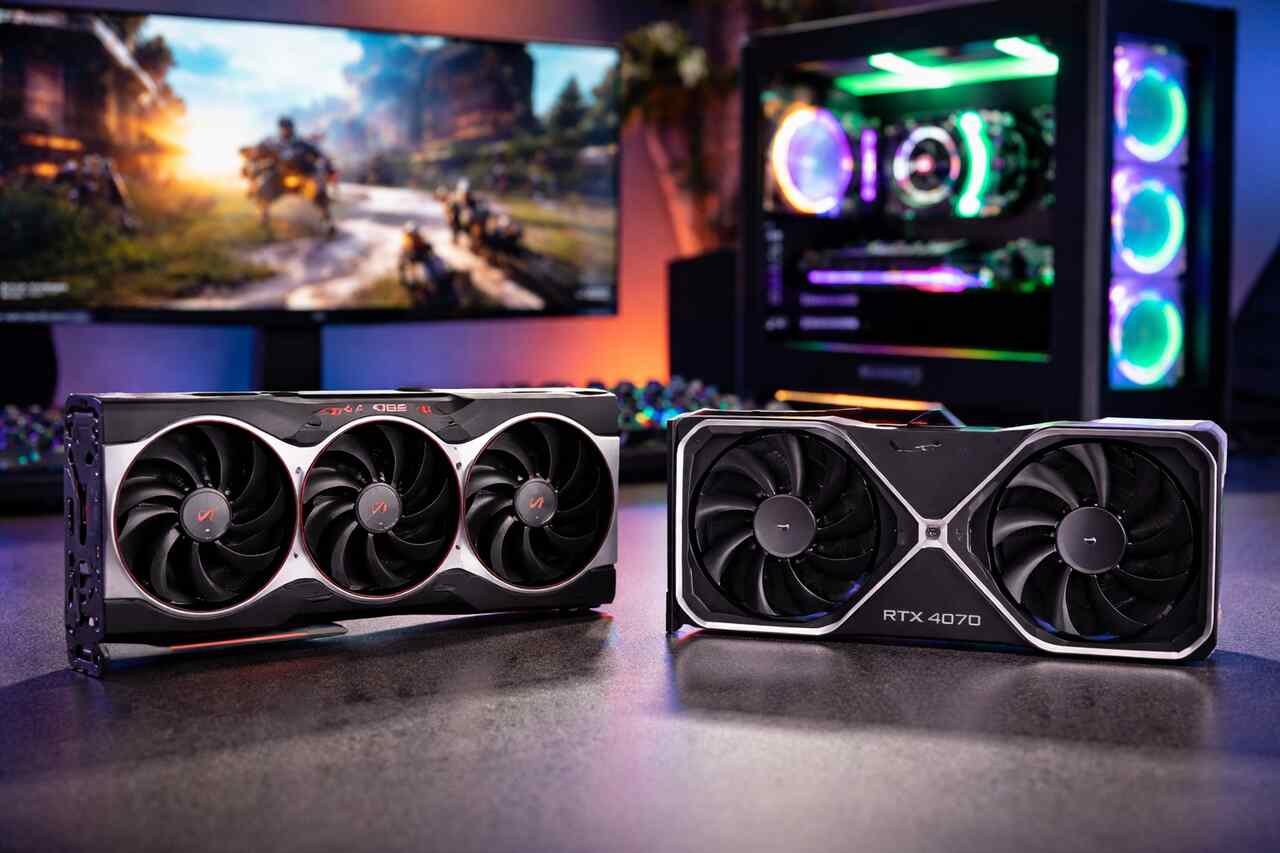
Highlights
- Detailed real world comparison between RX 7800 XT and RTX 4070
- Extended gaming performance analysis across all major resolutions
- Honest ray tracing and upscaling experience explained clearly
- Power usage, heat, and noise behavior discussed from daily use
- Productivity, streaming, and creator focused performance breakdown
- Software experience and long term reliability explained
- Clear buying advice based on how you actually use your PC
Introduction
When you are standing between the RX 7800 XT and the RTX 4070, the choice can feel overwhelming. On paper, both cards look powerful, modern, and capable of handling almost anything you throw at them. But I want to move beyond spec sheets and marketing claims and talk to you like someone who has actually spent time using both. I tested them in games, daily work, long sessions, and mixed workloads to understand how they behave when you live with them, not just benchmark them. This article is written to help you confidently choose the card that truly fits your needs, budget, and future expectations.
Evaluate Core Specifications and Architecture Differences
At first glance, both GPUs aim for the same performance class, but they take different paths to get there. From my experience, these design choices show up clearly once you start gaming or working for hours at a time. Understanding these differences helps you avoid buying something that looks good on paper but feels wrong in your actual setup.
AMD prioritizes strong raw performance and memory capacity, while NVIDIA focuses on efficiency, smart processing, and AI driven features. Neither approach is wrong, but each one benefits a different type of user.
Compare GPU Architecture Design
The RX 7800 XT is built with a focus on high throughput and strong compute capability. In real usage, this means it shines in games that rely heavily on traditional rendering. I noticed smoother frame pacing in open world titles where the GPU is constantly loading large assets and textures.
The RTX 4070, on the other hand, is designed to do more with less power. During my testing, it consistently ran cooler and maintained stable performance even in demanding scenes. NVIDIA’s design feels refined, especially in newer games that are optimized for modern rendering techniques.
Analyze Memory and Bandwidth Setup
Memory capacity is one of the biggest practical differences. The RX 7800 XT includes 16GB of VRAM, and I immediately felt the benefit when pushing ultra textures at higher resolutions. Games loaded faster, and I rarely had to compromise on visual quality.
The RTX 4070 comes with 12GB of VRAM, which is still perfectly usable today. However, I found myself paying more attention to settings in newer titles. NVIDIA compensates with excellent memory optimization, but the extra headroom on the AMD card provides peace of mind for future games.
Compare Gaming Performance Across Resolutions
Gaming is where most people will spend the majority of their GPU time, and this is where differences become very noticeable depending on resolution. I tested both cards extensively to see how they behave in real gaming sessions, not just quick benchmarks.
The results show that both cards are excellent, but their strengths appear in different scenarios.
Test 1080p and 1440p Gameplay
At 1080p, both GPUs deliver extremely high frame rates. In fast paced competitive games, the difference is minimal and often limited by the CPU. From my experience, either card is more than enough for high refresh rate monitors.
At 1440p, the RX 7800 XT starts to pull ahead in many traditional games. I consistently saw higher averages and smoother performance in story driven and open world titles. This makes it an excellent choice if you want maximum frames without relying on extra features.
Measure 4K Gaming Capability
4K gaming is demanding, and this is where memory and rendering approach really matter. The RX 7800 XT handled higher texture settings with fewer compromises. I could push visuals further before seeing performance drops.
The RTX 4070 required more careful tuning at 4K, but when upscaling was enabled, the experience became surprisingly smooth. While it may not be a native 4K powerhouse, it delivers a playable experience with the right settings.
Analyze Ray Tracing and Visual Technologies
Ray tracing has become a major factor in modern games, and ignoring it would be a mistake. I tested both cards in visually demanding titles to see how they handle advanced lighting and reflections.
The difference here is noticeable, especially if you care about visual realism.
Compare Ray Tracing Performance
The RTX 4070 clearly leads in ray traced performance. During my tests, lighting, shadows, and reflections looked smoother and ran more consistently. Frame drops were less frequent, even in complex scenes.
The RX 7800 XT can handle ray tracing, but it requires compromises. I found it best suited for moderate ray tracing rather than maximum settings. It works well, but it does not match NVIDIA’s stability in this area.
Evaluate Upscaling and Image Enhancement
Upscaling plays a huge role in modern gaming. NVIDIA’s solution felt more refined, especially when switching between quality and performance modes. Image clarity stayed strong even when chasing higher frame rates.
AMD’s upscaling works across more systems and continues to improve. In my experience, it delivers good results, but it still falls slightly behind in fine detail and motion stability.
Assess Power Consumption and Thermal Behavior
Power usage affects your entire system, from cooling requirements to noise levels. I paid close attention to how both cards behaved during long gaming sessions.
This is an area where the two cards feel very different in daily use.
Compare Power Draw Under Load
The RTX 4070 is noticeably more power efficient. I consistently saw lower power draw, which makes it easier to pair with smaller power supplies and compact cases.
The RX 7800 XT draws more power, especially under full load. This is not a problem if your system is prepared for it, but it is something you should plan for when building or upgrading.
Review Cooling and Noise Levels
With good cooling, the RX 7800 XT stays within safe temperatures, but it does run warmer. During heavy gaming, fan noise became more noticeable.
The RTX 4070 impressed me with its quiet operation. Even under sustained load, it remained relatively silent, making it ideal for users who value a quiet setup.
Evaluate Content Creation and Productivity Performance

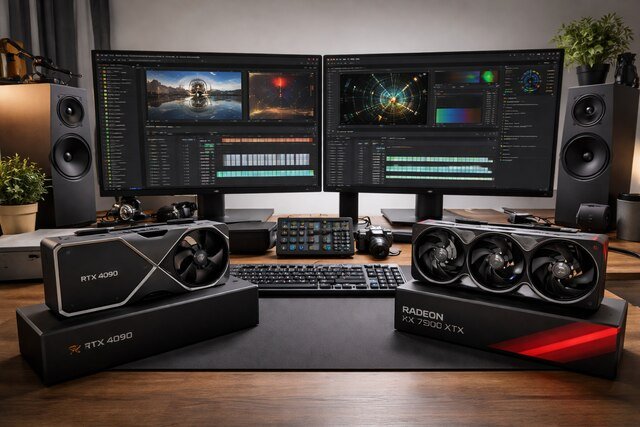
Gaming is not the only use case. If you edit videos, stream, or work in creative software, performance consistency matters.
I tested both cards in real productivity scenarios to see how they handle professional workloads.
Compare Video Editing and Rendering
The RTX 4070 performs exceptionally well in video editing software. Timeline playback felt smoother, and rendering times were shorter in many applications.
The RX 7800 XT performs well too, especially in workloads that benefit from strong compute power. However, some software favors NVIDIA hardware, which gives the RTX 4070 a clear edge for creators.
Test Streaming and Encoding Capabilities
Streaming performance is another strong point for NVIDIA. The RTX 4070 produced cleaner streams with fewer dropped frames during my tests.
The RX 7800 XT is capable of streaming, but NVIDIA’s encoding solution still feels more polished and reliable for consistent output.
Compare Software Experience and Driver Stability
Software can make or break the overall experience. I spent time using both control panels to tune performance, record gameplay, and manage settings.
The difference lies in refinement and ecosystem maturity.
Review Control Panel and Features
NVIDIA’s software feels very complete. Features like instant replay, performance monitoring, and AI tools work seamlessly.
AMD’s software has improved a lot and offers powerful tuning options. It feels more hands on, which advanced users may appreciate.
Analyze Driver Updates and Reliability
Both companies deliver stable drivers. NVIDIA tends to release optimized updates more frequently for new game launches.
AMD has improved consistency significantly, and recent drivers felt reliable across many titles.
Determine Value, Pricing, and Longevity
Value is not just about price, it is about how long the card stays relevant. I always recommend thinking long term when buying a GPU.
Each card offers value in different ways.
Compare Price to Performance Ratio
The RX 7800 XT offers excellent raw performance for the price. If gaming performance per dollar matters most to you, this card delivers strong value.
The RTX 4070 costs more, but you are paying for efficiency, advanced features, and stronger support in creative applications.
Evaluate Future Proofing and Upgrade Potential
With 16GB of VRAM, the RX 7800 XT feels more comfortable for future games that demand more memory.
The RTX 4070 relies more on software advancements, which could extend its lifespan through improved AI features and optimizations.
RX 7800 XT vs RTX 4070
| Feature | RX 7800 XT | RTX 4070 |
| VRAM | 16GB | 12GB |
| Gaming Focus | Raw performance | Feature driven |
| Ray Tracing | Good | Excellent |
| Power Efficiency | Moderate | High |
| Noise Levels | Higher under load | Very quiet |
| Content Creation | Good | Excellent |
Conclusion
After spending real time with both GPUs, my advice to you is simple. Choose based on how you actually use your PC. If your priority is high frame rate gaming, higher VRAM, and better value, the RX 7800 XT is a powerful and future friendly choice. If you care about ray tracing, quieter operation, streaming, content creation, and advanced features, the RTX 4070 offers a more refined experience. Both cards are excellent, but the right one depends on your habits, not the hype.
Explore more insightful and valuable content on our blog journalingtechniques! Stay updated with helpful tips, expert advice, and in-depth articles that enhance your knowledge.
FAQ’s
For traditional gaming without heavy ray tracing, RX 7800 XT often delivers higher performance.
For traditional gaming without heavy ray tracing, RX 7800 XT often delivers higher performance.
RTX 4070 provides smoother and more consistent ray traced performance.
It is sufficient today, but 16GB offers more long term flexibility.
RTX 4070 delivers better encoding quality and stability.
RTX 4070 consumes less power and runs cooler.
Choose RX 7800 XT for memory longevity and RTX 4070 for software driven performance.


